
Most Common Home Inspection Issues That Increase Home Insurance Costs in Florida (A Home Inspector’s Perspective)
Florida homeowners are seeing home insurance premiums rise year after year. While weather patterns and market conditions play a role, from a home inspection perspective, insurance carriers consistently focus on a set of very specific property conditions when determining pricing, eligibility, or renewals.
Understanding these issues early can help homeowners avoid surprises and make informed decisions.
1. Roof Deck Attachment & the Importance of the Third Nail (Roof Affidavit)
One of the most overlooked — yet critical — items affecting insurance pricing in Florida is the roof deck attachment.
During a home inspection or wind mitigation inspection, we often verify:
-
Nail type (8d nails vs. staples)
-
Nail spacing (6” vs. 12”)
-
Number of nails per truss
Homes built or re-roofed under older standards may only have two nails per truss, while current standards require three nails. When documentation is missing, a Third Nail Roof Affidavit can be required by insurance companies.
From a home inspection standpoint, this affidavit:
-
Confirms proper roof attachment
-
Reduces wind uplift risk
-
Can directly impact insurance eligibility and premiums
Many homeowners are surprised to learn that adding or documenting the third nail can make a measurable difference during insurance review.
2. Obsolete or High-Risk Electrical Panels
Electrical panels are one of the most common reasons insurance companies increase premiums or request corrections.
During home inspections, panels that frequently raise concerns include:
-
Federal Pacific (FPE / Stab-Lok) – known for breakers failing to trip
-
Zinsco / Sylvania-Zinsco – overheating and bus bar failures
-
Challenger panels – documented breaker defects
-
Improperly modified panels or double-tapped breakers
Even when these panels are still functioning, insurance carriers often classify them as high fire risk, leading to higher premiums or required replacement.
3. Plumbing Materials That Affect Insurance Risk
Water damage claims are among the most expensive losses for insurance companies, which is why plumbing materials receive close attention.
Common piping materials flagged during home inspections include:
-
Polybutylene (PB) piping – prone to sudden failure
-
Galvanized steel – corrosion and restricted flow
-
Older CPVC with signs of brittleness
-
Mixed materials with improper transitions
From an insurance perspective, aging or outdated plumbing increases the likelihood of leaks — even when no active leak is present at the time of inspection.
4. Moisture Intrusion & Past Water Damage
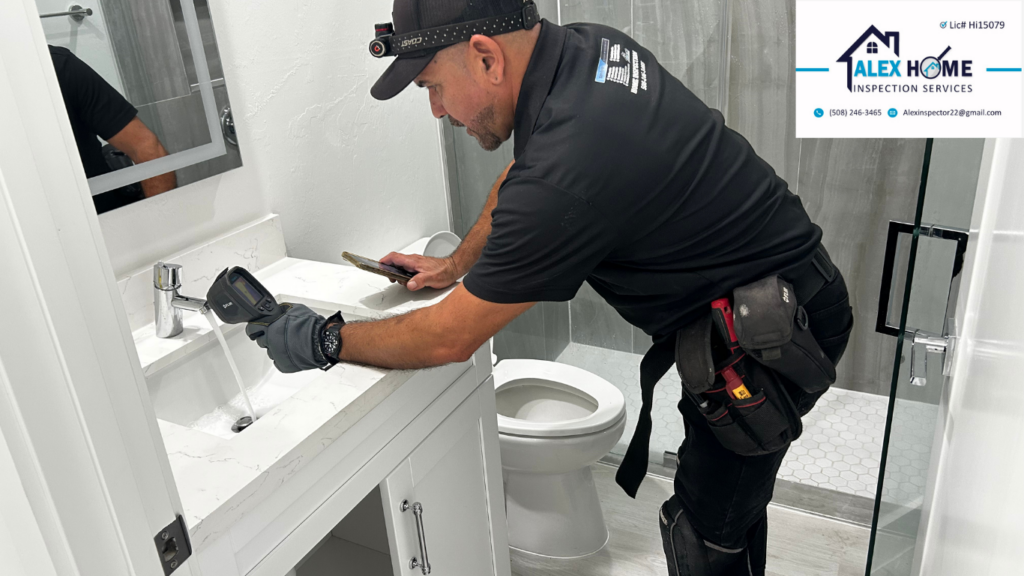
Moisture is one of the most influential risk factors identified during a home inspection.
Inspectors commonly document:
-
Stains on ceilings or walls
-
Elevated moisture readings
-
Poor attic ventilation
-
Past roof or plumbing leaks
Even when repairs were completed, documented moisture history can affect insurance underwriting if the root cause is unclear or unresolved.
5. Impact Windows, Shutters & Opening Protection
In Florida, opening protection plays a major role in wind-related insurance credits.
During inspections, we verify:
-
Impact-rated windows and doors
-
Approved hurricane shutters
-
Proper installation and labeling
-
Coverage for all glazed openings
Homes without impact windows or approved shutters may:
-
Miss out on wind mitigation credits
-
Be rated as higher wind risk
-
Face higher premiums in coastal or high-wind zones
Proper documentation of these features is just as important as having them installed.
6. Aging Systems & Lack of Maintenance (15+ Years)
Homes with systems over 15 years old, especially when maintenance records are limited, often face insurance scrutiny.
Common examples include:
-
Roofs nearing end-of-life
-
HVAC systems with corrosion or drainage issues
-
Water heaters beyond typical service life
-
Deferred maintenance across multiple systems
From a home inspection perspective, age alone isn’t always the issue — lack of maintenance is. Insurers view neglected systems as higher risk for sudden failure.
Why Home Inspections Matter for Insurance Awareness
A professional home inspection does not set insurance prices, but it provides accururate, third-party documentation of a home’s condition.
This helps homeowners:
-
Understand how insurers evaluate risk
-
Address issues proactively
-
Avoid last-minute insurance problems
-
Prioritize improvements strategically
From the home inspection standpoint, information and documentation are power.
Schedule a Home Inspection Before Your Insurance Review
If you’re purchasing a home, renewing insurance, or preparing for underwriting, a professional home inspection can help identify conditions that commonly affect insurance decisions.
Serving homeowners across Sarasota, Bradenton, Tampa, Fort Myers, Naples, and all of Florida, our inspections focus on clarity, accuracy, and practical guidance.
