


A water leak rarely announces itself. It doesn’t burst through the wall on day one — it drips quietly behind a cabinet, under a floor, or inside a ceiling for weeks before you ever see a puddle. By the time most homeowners notice a problem, the leak has already been running long enough to warp wood, feed mold, or drive up a water bill. Learning the early signs of a water leak in your home is one of the simplest ways to catch a small plumbing problem before it turns into an expensive repair.
This matters even more in Florida. Humidity is already high most of the year, so a hidden leak has extra help growing mold and softening building materials before anyone spots it. Whether you own a home in Bradenton, Sarasota, or anywhere else along the Gulf Coast, a few minutes of noticing the right clues can save you thousands of dollars down the road.
Here are seven small signs of a water leak you should never ignore, plus what you can safely check yourself and when it’s time to bring in a professional.
Why Small Leaks Turn Into Big Problems
It’s easy to assume a small drip isn’t worth worrying about. But according to the U.S. Environmental Protection Agency’s WaterSense program, household leaks commonly waste thousands of gallons of water per home each year, and a single leaky pipe dripping once per second can waste more than 3,000 gallons annually. A running toilet can waste even more. That’s water you’re paying for, whether you ever see it or not.
Beyond the cost, moisture that sits inside a wall, floor, or ceiling for weeks can soften wood framing, ruin drywall, and create the damp conditions mold needs to grow. None of that happens overnight. It happens slowly, which is exactly why catching the early warning signs matters so much.
7 Signs of a Water Leak in Your Home You Should Never Ignore
1. A water bill that’s higher than usual
If your water bill jumps and you haven’t changed your habits — no new houseguests, no extra laundry, no filling a pool — that’s often the first real clue something is leaking somewhere you can’t see. Compare a few months of bills side by side. A steady, unexplained increase is worth investigating.
2. A musty or mildew smell that won’t go away
A persistent damp, musty odor, especially in one particular room, closet, or under a sink, usually means moisture is sitting somewhere it shouldn’t be. Air fresheners might mask it for a day, but the smell always comes back because the source hasn’t been fixed.
3. Stains or discoloration on ceilings or walls
Yellow-brown rings, dark patches, or spots that seem to slowly grow are a classic sign of water intrusion, meaning water is getting into a spot it doesn’t belong, above or behind that surface. Even if the area feels dry when you touch it, the leak causing the stain may still be active.
4. Peeling paint or bubbling, soft drywall
Paint and drywall that bubbles, cracks, or feels soft and spongy to the touch is often being pushed apart by moisture trapped behind it. This is a sign the problem has been going on for a while, since it usually takes repeated or ongoing moisture to change how a wall feels.
5. Flooring that feels soft, warped, or is cupping
Wood or laminate floors that feel spongy underfoot, or boards that start to cup or buckle at the edges, are frequently reacting to moisture coming from underneath. Tile floors can hint at the same issue with grout that stays damp or loosens for no clear reason.
6. Visible mold or a mold-like smell
Small dark or greenish spots in corners, along baseboards, or around window frames can be mold getting a foothold thanks to excess moisture. According to the EPA, mold growth indoors is a sign that moisture levels are too high somewhere nearby, and it’s worth addressing both the mold and whatever is feeding it with water.
7. The sound of running water when everything is off
If you hear a faint hiss, trickle, or rushing sound inside a wall or under the floor when every faucet and appliance is off, trust your ears. That sound is often water moving somewhere it isn’t supposed to be.
Simple Things You Can Check Yourself
You don’t need any special tools or training to look for the signs of a water leak in your home. Here are some safe, simple checks any homeowner can do:
- Look under sinks and around toilets. Open the cabinet doors under your kitchen and bathroom sinks and feel around the pipes and the floor of the cabinet for dampness or a musty smell.
- Check your water meter. Make sure nothing in the house is using water, then find your water meter and watch the small leak indicator (often a triangle or dial) for a couple of minutes. If it’s moving with everything off, water is running somewhere.
- Compare your last few water bills. A steady, unexplained climb is one of the easiest signs to catch from your kitchen table.
- Walk your ceilings and walls. Once every month or two, take a slow look at ceilings, especially under bathrooms and around vents, for new spots, discoloration, or soft-looking texture.
- Check around windows and exterior doors. Look for soft trim, discoloration, or a musty smell, which can point to water getting in from outside during Florida’s heavy rains.
- Watch your indoor humidity. If you have a thermostat or humidity monitor, a home that consistently reads higher than normal can be a clue that moisture is coming from somewhere unexpected.
What you shouldn’t do yourself: open an electrical panel, get into a tight or unsafe attic space, walk on the roof, or attempt any plumbing or structural repairs. Those tasks call for a licensed professional, both for safety and because fixing the wrong thing can hide a leak instead of solving it.
When It’s Time to Call a Professional
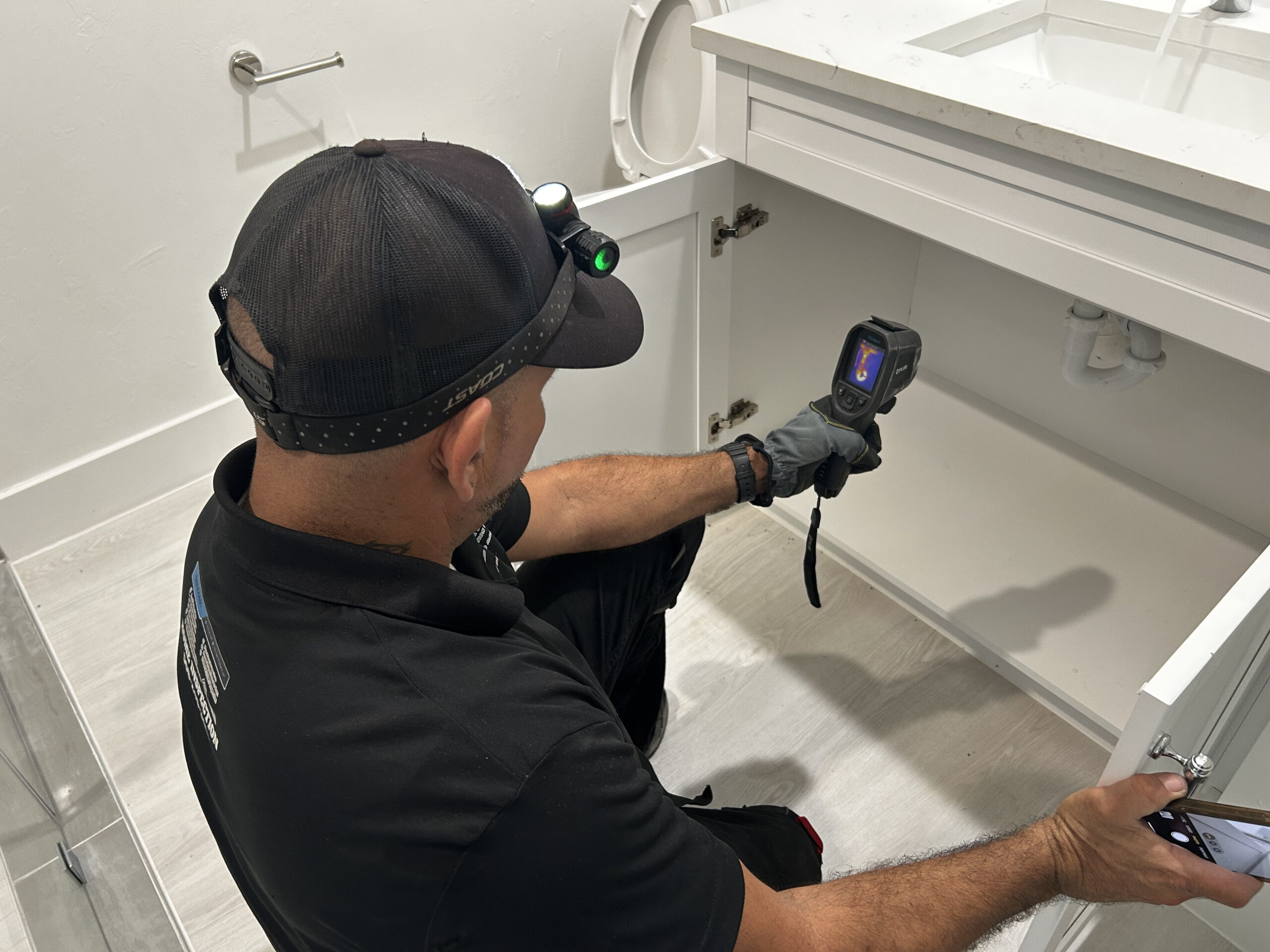
If you notice any of the signs above, or your gut just tells you something’s off, it’s reasonable to bring in a professional for an independent look. A home inspector or a licensed plumber can use tools like moisture meters and, in some cases, a sewer camera inspection to see inside pipes and drain lines that are otherwise impossible to check by eye. That kind of independent evaluation gives you a clear, unbiased picture of what’s actually happening, so you can make an informed decision about repairs rather than guessing.
This is also useful information to have if you’re buying or selling a home. A full home inspection looks at plumbing, moisture, and related systems throughout the property, giving both buyers and their Realtors a clearer picture of a home’s condition before closing.
Frequently Asked Questions
How do I know if I have a hidden water leak?
The clearest signs of a water leak in your home are a rising water bill with no change in usage, a musty smell that won’t go away, and staining on ceilings or walls. Checking your water meter with everything turned off is one of the fastest ways to confirm whether water is running somewhere in the house.
Can a small leak really cause a lot of damage?
Yes. A leak that seems minor can waste thousands of gallons of water a year and, more importantly, keep building materials damp long enough for mold to grow and wood to soften. The cost of the water is often small compared to the cost of repairing the damage a leak causes over time.
Is it normal for Florida homes to have more leak-related issues?
Florida’s humidity and heavy seasonal rain can make it harder to notice moisture problems early, since the air is already damp much of the year. That’s one reason routine checks around windows, ceilings, and plumbing fixtures are especially worthwhile for Florida homeowners.
What should I do if I find a possible leak?
Start with the simple checks above to confirm what you’re seeing. If you find damp spots, hear running water, or notice a rising bill, it’s a good idea to have a licensed plumber or a home inspector take a closer look before the problem grows.
Should I be worried about mold if I find a leak?
Any leak that’s been running for a while raises the chance of mold growth, especially in Florida’s humidity. If you see visible mold or notice a musty smell that doesn’t go away, it’s worth having the moisture source identified and addressed rather than just cleaning the surface.
A Second Set of Eyes Helps
Most homeowners aren’t trying to become plumbing experts, and they shouldn’t have to. Catching the signs of a water leak in your home early is really about paying attention to small changes and knowing when to bring in someone who can look closer. Whether you’re a homeowner keeping an eye on your own house, a buyer trying to understand a property before closing, or a Realtor helping a client make sense of what an inspection turned up, an independent, unbiased look at a home’s condition helps everyone make informed decisions with confidence.
Alex Home Inspection Services LLC, Florida License #HI-15079, helps homeowners, buyers, and Realtors throughout the Bradenton, Sarasota, and Tampa Bay area understand exactly what’s going on inside a property, from plumbing and moisture concerns to full four-point and wind mitigation inspections. Reports are delivered within 24 hours. Call or text (508) 246-3465, reach out on WhatsApp at (813) 510-9403, or schedule an inspection online anytime.