


If you own a home in Venice, FL, you have probably asked a simple question on a muggy afternoon: the house feels cold, so why does the air still feel sticky? The answer comes down to AC humidity control. Your air conditioner has two jobs. It cools the air, and it pulls moisture out of the air. When only one of those jobs is getting done, you can end up with a chilly house that still feels damp.
This guide is for homeowners, buyers, and the Realtors who help them. It explains, in plain words, how to tell whether your AC is controlling humidity, what you can safely check yourself, and when it makes sense to bring in a professional.
Why AC Humidity Control Matters in Venice and Along the Gulf Coast
Venice sits right on the Gulf, and the air here holds a lot of water for much of the year. Many homes in the area are also closed up for weeks at a time while owners are away for part of the year. A closed house with weak humidity control is the kind of place where musty smells and mold spots can start.
The U.S. Environmental Protection Agency (EPA) suggests keeping indoor humidity below 60 percent, and ideally between 30 and 50 percent. You can read the details in the EPA’s guide to mold, moisture, and your home. Humidity is measured as “relative humidity,” which is just a percentage that tells you how much moisture the air is holding compared with the most it could hold at that temperature.
Why should this matter to a buyer or seller? Damp air can lead to musty odors, stained ceilings, peeling paint, and mold on walls or in closets. Those are the same kinds of items that show up in conversations during a home purchase, so understanding them early helps everyone stay calm and make good decisions.
Cooling vs. Drying: What Your AC Is Really Doing
Inside your AC is a cold coil. Warm, humid indoor air blows across it. The coil cools the air, and water in the air turns to drops on the coil, much like drops forming on a cold glass of tea. Those drops run down into a pan and out through a drain line. That is how your AC dries the air.
For this to work well, the AC needs to run long enough to pull water out, not just cool the rooms. If the system reaches the thermostat setting too fast and shuts off, it may not have run long enough to remove much moisture. You may hear this called “short cycling,” which simply means the AC turns on and off in short bursts.
A system that is too big for the house can commonly behave this way. So can a system with other issues. It is not always the equipment’s fault, and only a qualified HVAC professional can say what is going on with your system.
Signs Your AC Is Cooling but Not Controlling Humidity
Here are common signs that your AC humidity control may need a closer look:
- The house feels clammy even when the thermostat says it is cool. Sticky skin, damp towels, and a “heavy” feeling in the air are good clues.
- Musty smell. A stale, earthy smell in closets, bathrooms, or bedrooms can point to extra moisture.
- Condensation on windows. Fog or drops on the inside of the glass can show that the indoor air is holding a lot of water.
- The AC turns on and off often. If it keeps starting and stopping in short bursts, it may not be drying the air well.
- Water stains or dark spots. Look for marks on ceilings, around vents, or in the corners of rooms.
- Warped wood or peeling paint. Wood floors, cabinets, and trim can react to damp air over time.
One sign by itself does not mean something is wrong. Several signs at the same time are a good reason to ask for a closer look.
Simple Things You Can Check Yourself
You do not need any special skills for these. They are all safe, at-the-floor-level checks.
- Read the humidity. A small, low-cost indoor humidity meter (sometimes called a hygrometer) shows the percentage in a room. Check it in a few rooms at different times of day. Numbers that stay above 60 percent are worth a follow-up.
- Look at the thermostat fan setting. Many homeowners leave the fan set to “on,” which keeps the fan running all the time. That can sometimes blow moisture from the coil back into the house. “Auto” is commonly the better choice for humidity, but check with your HVAC company if you are unsure.
- Check the air filter. A dirty filter blocks airflow and can make the AC work harder. Replace it on the schedule in your manual.
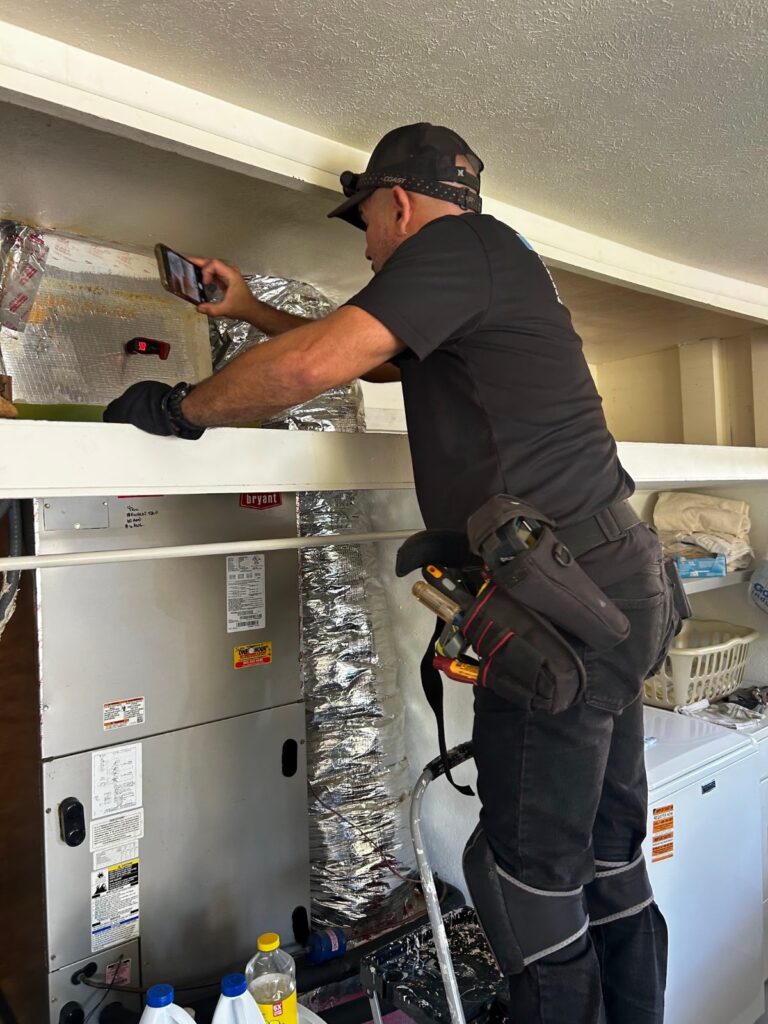
- Look at your vents and ceilings. Check for damp spots, dark marks, or drips around vents and in the ceiling near the air handler (the indoor part of the AC).
- Check closets and corners. Sniff for musty smells and look for spots on walls in closets, behind furniture, and in bathrooms.
- Use the bathroom and kitchen fans. Run them during showers and cooking so extra steam does not build up.
A few things should be left to the professionals. Do not open the air handler, climb into a hot attic, or work on electrical parts. If you see water around the air handler, rust, or a steady drip, call a licensed HVAC or plumbing professional. Steady moisture problems are worth a closer look, and our guide on small signs of a water leak can help you tell the difference between a leak and a humidity problem.
Why Humidity Shows Up on Home Inspections
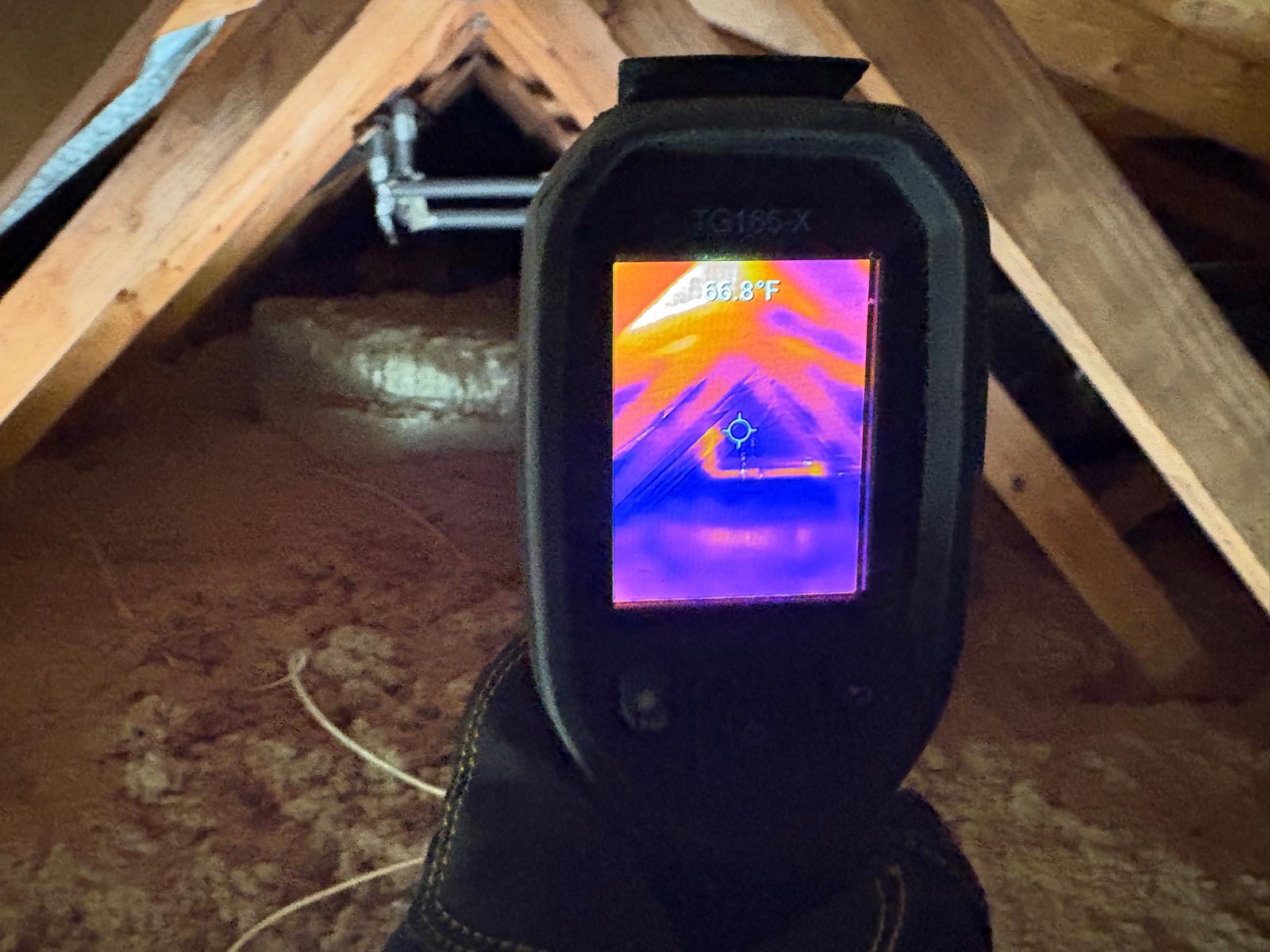
A home inspector looks at how the whole house works together. During a visual inspection, an inspector may note things like visible moisture stains, signs of condensation, musty odors, or an AC that is cooling normally but shows other signs of damp air. The goal is to explain what was seen, put it in context, and help the buyer and the Realtor decide on next steps. Findings like these are not automatically deal breakers. They are information, and most can be handled with a plan.
If you are newly under contract, you may also like our list of simple things to check after buying a house. And if a big storm has just passed, see our after-heavy-rain checklist.
Practical Ways Homeowners Can Help Keep Humidity Down
- Keep the indoor temperature steady instead of setting it very high when you leave, especially for long absences. Ask an HVAC professional what setting is right for your home.
- Do not let water sit. Wipe up spills and fix small leaks quickly.
- Keep doors and windows closed when the outdoor air is muggy.
- Have your AC serviced regularly by a licensed HVAC company.
- If humidity stays high, ask a licensed HVAC professional whether a dehumidifier or another fix makes sense for your home.
For more on how moisture and cold surfaces cause condensation in a home, see the EPA’s mold course, which explains it in a clear, practical way.
Frequently Asked Questions About AC Humidity Control
Does my air conditioner remove humidity?
Yes. As warm air passes over the cold coil inside the AC, water in the air turns to drops and drains away. This is why AC humidity control is part of how a system normally works. The AC has to run long enough to do it well.
What humidity level should I keep inside my home in Florida?
The EPA recommends indoor humidity below 60 percent, and ideally 30 to 50 percent. In Florida, staying in the upper part of that range can be realistic during humid months. A simple humidity meter will show you where your home stands.
Why is my house cold but still sticky?
This commonly happens when the AC reaches the thermostat setting quickly and shuts off before it has pulled out much moisture. It can also happen with airflow problems or other system issues. A licensed HVAC professional can look into the cause.
Should I set my thermostat fan to “on” or “auto”?
“Auto” is commonly recommended for humidity because the fan runs only when the AC is cooling. With the fan always on, moisture on the coil can sometimes blow back into the house. Ask your HVAC company about the best setting for your system.
Will a home inspection tell me if my AC is controlling humidity?
A home inspection is a visual look at the home’s major systems. An inspector can note signs of moisture, condensation, and whether the AC is cooling as expected. It is not a full HVAC performance test, so if concerns come up, a licensed HVAC contractor may be the right next step.
Need Help Understanding Your Home?
Alex Home Inspection Services LLC is here to help homeowners, buyers, and Realtors understand what is going on with a property. Florida license #HI-15079. Alex Home Inspection Services LLC, based in Bradenton, serves Venice and surrounding Sarasota County communities. You can call (508) 246-3465, message on WhatsApp at (813) 510-9403, or schedule an inspection online.