


If you own a home in Punta Gorda and you have not looked at your insurance paperwork in a couple of years, this is the season to do it. A wind mitigation inspection Punta Gorda FL homeowners schedule before renewal is one of the few things on an insurance bill that the homeowner actually controls — and in 2026 the rules behind that report changed. Florida adopted a revised wind mitigation form that took effect April 1, and the state’s insurance market is finally moving in homeowners’ favor, which means more people are shopping carriers than at any point in the last several years.
Here is what changed, what an inspector is actually looking for in a Charlotte County home, and why the timing this fall is unusually good.
Florida’s wind mitigation form changed on April 1, 2026
The Uniform Mitigation Verification Inspection Form — form OIR-B1-1802 — is the single document every Florida insurer uses to apply wind credits. The Florida Office of Insurance Regulation adopted a revised version, Rev. 04/26, and under the rule change implementing section 627.0629(1), Florida Statutes, the updated form took effect April 1, 2026. Any inspection performed on or after that date must use the revised version. Citizens Property Insurance confirmed the same transition to its policyholders and inspectors.
The most meaningful change for a Punta Gorda homeowner: the new form adds performance-based options for documenting roof-to-wall attachment. The older form largely forced an inspector to sort a connection into a short list of categories — toe nail, clip, single wrap, double wrap. The revised form gives more room to document what a connection actually achieves, which is built on updated Florida wind-loss research rather than assumptions from two decades ago.
That matters because a wind mitigation report is generally accepted by carriers for up to five years. If your last report was done in 2022, 2023, or 2024, it is on the old form, it is approaching the end of its useful life, and it may not capture a credit the current form allows. A new report is not a formality in that situation — it is a different document.
What an inspector actually checks
A wind mitigation inspection is narrow and specific. It is not a full home inspection and it does not grade the condition of your house. It documents a short list of construction features that affect how a home performs in high wind:
- Building code era. When the home was built or when the roof was permitted. In Florida this is the dividing line that determines which credit table applies.
- Roof covering. Whether the shingles, tile, or metal meet current product approval standards, and when they were installed.
- Roof deck attachment. The nail size and spacing holding the plywood or board sheathing to the trusses — measured from inside the attic.
- Roof-to-wall connection. The hardware tying the roof structure down to the walls. This is frequently the largest single credit on the form.
- Roof geometry. Hip roofs typically earn the strongest geometry credit because they shed wind on all four sides rather than presenting a flat gable face.
- Secondary water resistance. A sealed roof deck layer beneath the covering.
- Opening protection. Impact-rated windows and doors, or shutters rated to protect them. To count, protection generally has to cover all glazed openings — one unprotected window can limit the credit for the whole house.
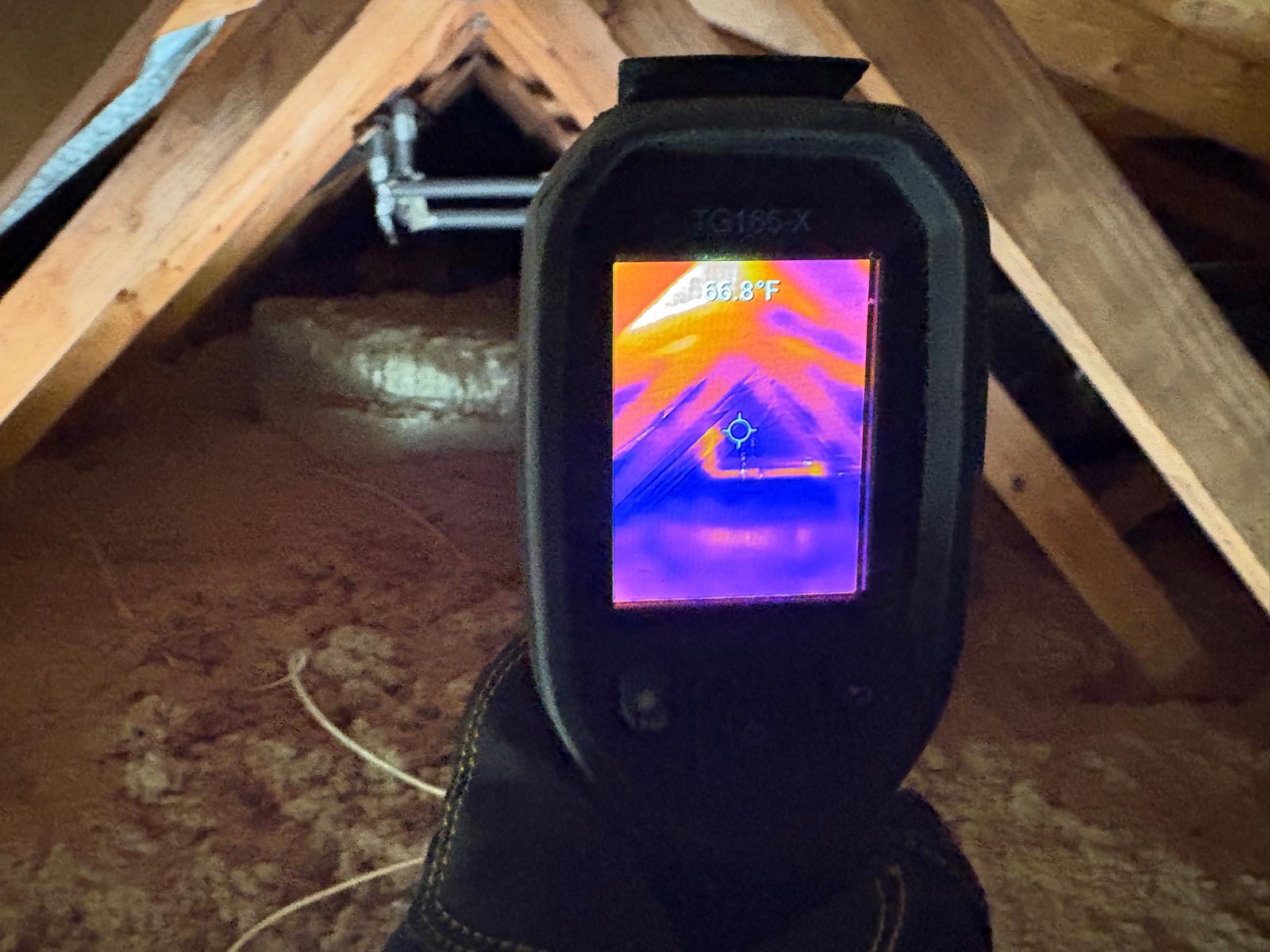
Every one of those items has to be documented with photographs attached to the form. An inspector cannot simply check a box. That is why the attic access and the window labels matter so much during the visit.
Why Punta Gorda homes are a particular case
Punta Gorda’s housing stock splits in a way that makes this inspection unusually worthwhile here. A large share of the city’s homes predate the 2002 statewide adoption of the Florida Building Code — older waterfront and canal-front houses through Punta Gorda Isles and the surrounding Charlotte County neighborhoods. Another large share was rebuilt or substantially re-roofed after Hurricane Charley came ashore in 2004, and again after the storm damage of the last several years.
Those rebuilt homes are frequently sitting on strong wind credits that the owner has never actually claimed. A post-Charley rebuild often has a modern roof-to-wall connection, a properly nailed deck, a sealed deck layer, and in many cases impact-rated glazing — all of which are worth documenting. But a credit only exists on your policy if a licensed inspector has put it on the form and the carrier has applied it. Plenty of Charlotte County homeowners are paying a windstorm premium calculated as though their house were built to a standard it stopped meeting twenty years ago.
The reverse is also useful. If your Punta Gorda home is older and earns fewer credits, the inspection tells you exactly which features are missing — which is the information you need before deciding whether a roof replacement or shutter project is worth doing, and which is also what the state grant program will want to see.
Insurance rates are actually falling — which is why the report matters now
This is the part most homeowners have not caught up with. According to an actuarial report covered by Florida Realtors in September 2026, Florida home and auto policyholders paid substantially less for insurance in 2025 than they did the year before. New carriers have entered the state and Citizens’ share of total insured value has fallen sharply.
Falling rates change homeowner behavior. When the market was shrinking, most people took whatever renewal they were offered. Now there are more carriers willing to quote, and homeowners are shopping again. A current wind mitigation report is what makes that shopping productive — every carrier you approach will price your windstorm exposure off that form. Without one, you are asking for quotes based on the worst assumptions a carrier is allowed to make about your house.
One honest caveat: wind credits apply to the windstorm portion of your premium, not the whole bill, and how much they move your renewal depends entirely on your home’s actual features, your carrier, and your coverage. Anyone who quotes you a guaranteed savings figure before looking at your attic is guessing.
The quiet 2026 season is your scheduling window
The Atlantic season has been remarkably slow this year. As of late September 2026 the basin has produced only a handful of named storms and no hurricane yet — the season passed the latest first-hurricane date in the satellite era in September. NOAA has maintained its below-normal outlook of 7 to 13 named storms and 2 to 6 hurricanes.
That is not a reason to relax about your coverage. The season runs through November 30, and a quiet year says nothing about the next one. What it does mean, practically, is that inspectors across Southwest Florida are not buried in post-storm damage work right now. Scheduling a wind mitigation inspection in Punta Gorda FL is easier in a calm September than it will be in the week after a named storm enters the Gulf, when every inspector, roofer, and adjuster in Charlotte County is booked. If your renewal is coming up this winter, this is the window.
What about the free state inspection?
The My Safe Florida Home program provides free wind mitigation inspections and mitigation grants to qualifying homeowners, and the 2026–27 state budget carried forward substantial funding for the program and its condominium pilot. It is a genuinely good program and worth applying for if you qualify.
The practical limitation is timing. Applications are handled subject to prioritization and available funding, and there is a real backlog of homeowners waiting. If your policy renews in sixty days, a place in that queue does not help you at renewal. Many homeowners do both — apply to the state program for the grant side, and hire a private inspection now so they have a current form in hand for this renewal cycle.
Scheduling a wind mitigation inspection Punta Gorda FL homeowners can use at renewal
The visit itself is short. An inspector needs access to the attic, the exterior of the roof, and your windows and doors. Have your permit history handy if you have it — the year the roof was permitted is one of the details the form asks for, and a permit record settles it faster than an estimate.
Two things worth knowing. First, a wind mitigation inspection is commonly paired with a 4-point insurance inspection in the same visit, since older homes often need both for a carrier to write or renew a policy. Second, if you are buying rather than renewing, the wind mitigation report is a separate document from the full home inspection and from the lender’s appraisal — our recent breakdown of the UAD 3.6 appraisal changes lays out which document does what. If your roof is part of the conversation, Florida’s roof code rules are worth reading alongside this.
Alex Home Inspection Services LLC provides wind mitigation inspections, 4-point insurance inspections, and full home inspections in Punta Gorda and throughout Charlotte County, with reports delivered within 24 hours. Based in Bradenton, we serve Punta Gorda and surrounding Charlotte County communities. Florida license #HI-15079. Call (508) 246-3465 or schedule online.