Welcome

Home Insurance Inspection

Florida 4-point inspection of HVAC and attic access by a licensed inspector
Home Insurance Inspection

Florida’s Hurricane Outlook Improved for 2026 — But Your Wind Mitigation Inspection Still Decides What You Pay

On August 6, NOAA updated its 2026 Atlantic hurricane season outlook and raised the probability of a below-average season from 55% to 75%, citing El Niño conditions in the Pacific that tend to suppress Atlantic storm development. The revised numbers call for 7 to 13 named storms and 2 to 6 hurricanes, with 0 to 2 reaching major hurricane strength — a step down from NOAA’s initial May forecast. So far in 2026, the season has produced two named storms, Arthur and Bertha, and no hurricanes. That is genuinely good news for Florida homeowners heading into the traditional peak of the season, which runs from mid-September through October. But a quieter forecast is not the same thing as a guarantee, and it has almost nothing to do with what you pay for windstorm coverage. That number is driven by a different factor entirely: whether your home has a current, properly documented wind mitigation inspection on file with your insurer. A Quieter Season Forecast Doesn’t Change Your Risk Profile NOAA’s seasonal outlooks describe overall Atlantic basin activity, not whether a storm will track toward Florida. A below-average season can still produce a landfalling hurricane — 1992’s Hurricane Andrew formed during a season that finished close to an average year overall. Insurers price windstorm risk based on a home’s construction, location, and documented mitigation features, not on a single season’s forecast. Nothing about NOAA’s update changes what your home needs to withstand wind events, or what your insurer needs to see on paper to reflect that in your premium. Florida’s Insurance Market Is Genuinely Improving — For a Specific Reason The backdrop here matters, and it’s worth understanding before you assume nothing has changed since your last renewal. The Florida Office of Insurance Regulation reported that home insurance rates decreased across the majority of counties through the first half of 2026, and Citizens Property Insurance approved rate filings that brought a statewide average reduction of roughly 8.7% at spring renewals. State officials reported that more than 330,000 Citizens policyholders across all 67 counties saw rate decreases this year, with South Florida seeing the largest cuts — Broward and Miami-Dade counties both averaged reductions near 14%. Citizens’ policy count has also fallen sharply, down to under 400,000 policies in early 2026, the lowest level in well over a decade, as more homeowners move back to private carriers through the state’s depopulation program. State officials attribute most of this improvement to litigation reform: the elimination of one-way attorney fees and assignment-of-benefits abuse, which drove down insurer losses and reinsurance costs, along with 17 new insurance companies entering the Florida market since the reforms passed. But rate relief at the market level doesn’t automatically show up on an individual homeowner’s bill. Wind mitigation credits are the mechanism that connects the two. Under Section 627.0629, Florida Statutes, insurers are required to offer premium discounts, credits, or reduced deductibles that reflect the reduced risk from documented wind-resistant construction features — and that requirement only applies to features an inspector has actually verified and reported. A home with excellent hurricane-resistant construction that has never been inspected, or was inspected years ago on an outdated form, isn’t receiving the full benefit the law entitles it to. Florida’s Wind Mitigation Form Just Changed — Again This is the part many homeowners miss. The form inspectors use to document those features, OIR-B1-1802, was revised effective April 1, 2026. The update, approved by the Florida Cabinet in September 2025, added performance-based options for roof-to-wall attachment classifications, allowing certain retrofit connectors to qualify for credit based on tested and documented uplift capacity rather than visual geometry alone. It also tightened documentation standards across the board — inspectors are now expected to support their findings with more specific photographic evidence and, where retrofit hardware is involved, manufacturer product-approval documentation. Every wind mitigation report is valid for up to five years, provided nothing material has changed at the property. That means plenty of homes in Florida are currently insured based on a report filled out on an older version of the form, or one that’s nearing its expiration without the homeowner realizing it. If your last inspection was done more than a few years ago, there’s a real chance it’s undervaluing features your home actually has, or missing newer retrofit options that could qualify for additional credit under the current standard. This applies even if you haven’t changed a single thing about your roof — the form itself, and what it’s able to recognize, is what changed. Switching Carriers Because of the Rate Relief? You’ll Need Fresh Paperwork With Citizens still moving policies to private carriers and more insurers competing for business in Florida this year, a lot of homeowners are shopping their coverage for the first time in years. New carriers don’t inherit your old wind mitigation report by default — most will ask for one before finalizing a quote, and some will only accept a report completed on the current OIR-B1-1802 form. The same is generally true for a 4-point inspection if your home is older. If you’re comparing quotes, accepting a Citizens takeout offer, or just renewing with a carrier that’s revising its underwriting criteria this year, a current wind mitigation inspection is often the difference between an estimated discount on a quote and a confirmed one on your actual bill. What a Wind Mitigation Inspection Actually Documents A wind mitigation inspection is a visual, non-invasive assessment focused entirely on how well a home is built to resist wind. It is not a substitute for a full home inspection, which looks at the overall condition of the roof, systems, and structure — it’s a narrower, insurance-specific evaluation. A licensed inspector records: Each of these carries statutory weight with insurers, which is why accuracy and current documentation matter more than most homeowners expect walking in. A roof-to-wall connection that was borderline under the old form’s visual-only standard, for example, may now qualify for a higher classification if a retrofit connector was installed

Florida insurance rates 2026 wind mitigation inspection
Home Insurance Inspection

Florida Insurance Rates Are Finally Falling in 2026 — What It Means for Your Home Inspection

Florida insurance rates are heading in a direction homeowners haven’t seen in years: down. After a stretch of hurricanes, insurer exits, and premium increases that made national headlines, new data from the Florida Office of Insurance Regulation shows a market that is genuinely stabilizing in 2026. Litigation is down sharply, new carriers are writing policies again, and some of the state’s largest insurers have filed for rate decreases. For home buyers and homeowners across Florida, that’s good news — but it isn’t automatic. Whether a specific property actually benefits from this shift usually comes down to what its inspection documentation says. A Sharp Drop in Insurance Litigation Florida’s share of the nation’s homeowners insurance lawsuits has fallen sharply since state lawmakers overhauled the claims litigation system. According to data the Florida Office of Insurance Regulation reported to Insurance Journal, Florida accounted for nearly 5% of homeowners insurance claims nationwide in 2025 but about 41% of related lawsuits. That’s a lopsided number, but it’s nearly half what it was in 2020, when Florida generated about 9% of the country’s homeowners claims and more than 79% of its claims lawsuits. The shift traces back to reforms the Florida Legislature approved in 2022 and 2023, which limited attorney fees in property insurance lawsuits and stopped policyholders from signing over insurance benefits to contractors — a practice known as assignment of benefits that had fueled years of litigation. Under the old system, a contractor could take over a homeowner’s claim, inflate the repair estimate, and sue the insurer directly if it didn’t pay in full, with the homeowner often left out of the negotiation entirely. Ending that practice removed a major driver of disputed claims. Fewer lawsuits generally means lower legal costs for insurers, which is one of the factors now feeding into rate filings — and, in theory, fewer disputed claims at renewal time for homeowners who file one. More Carriers Are Competing for Florida Business Again At least 20 new insurance carriers have entered the Florida market since the litigation reforms took effect. That matters because more competition tends to mean more coverage options and, eventually, downward pressure on price. Citizens Property Insurance, the state-backed insurer of last resort that swelled to roughly 1.4 million policies at the height of the crisis, had declined to about 294,000 policies by May 2026 as private insurers expanded and picked up market share, according to Fitch Ratings. Citizens itself is cutting rates by an average of 8.8% statewide beginning with spring 2026 renewals — the largest reduction in the insurer’s 24-year history. Heading into the year, the Florida Office of Insurance Regulation had received 73 filings for rate decreases and 94 filings for zero rate increases. That’s a meaningfully different picture than the years of near-universal double-digit increases Florida homeowners got used to after 2022. It’s also worth understanding why Citizens shrinking matters. Citizens exists as Florida’s insurer of last resort — coverage homeowners turn to when private carriers won’t write a policy, not the option most people want long-term. A falling Citizens policy count generally means private insurers are once again willing to take on risk they avoided a few years ago, which is a healthier long-term signal than a one-time rate cut on its own. Why Florida Insurance Rates Aren’t Falling Equally Everywhere None of this means every homeowner sees a lower bill this year. Premiums remain significantly higher than the national average in much of coastal Southwest Florida, and pricing still depends heavily on location, flood elevation, roof age, wind mitigation features, and claims history — the same variables insurers have always underwritten against. The market getting healthier doesn’t change how an individual policy gets priced; it changes how many carriers are willing to compete for that policy and on what terms. That’s exactly where inspection documentation comes in. Insurers don’t take a homeowner’s word for roof condition, electrical panel type, or hurricane-resistant features — they rely on a 4-point inspection and a wind mitigation inspection to verify them. Florida rolled out an updated wind mitigation inspection form on April 1, 2026, with insurers beginning to apply credits based on the new form starting in July. A home with outdated or missing inspection paperwork can miss out on the very discounts this improving market is supposed to deliver, simply because there’s no current documentation showing the insurer what’s actually protecting the house. Hurricane Season Adds a Wildcard Forecasters have trimmed their 2026 Atlantic hurricane season predictions, with Colorado State University and AccuWeather both citing El Niño conditions that tend to suppress storm development. The 2025 season produced 13 named storms but no direct hurricane landfall in Florida, giving insurers and reinsurers a break from catastrophic losses. A calmer 2026 season, if it holds, would give the market more room to keep stabilizing. September remains historically the riskiest month for Florida, particularly the southwest coast, and a single landfalling storm can reshape the outlook regardless of how favorable the preseason forecast looked. A quieter hurricane season is encouraging, but it isn’t a reason to skip the documentation that protects a home and a policy either way. Insurers price risk over the long run, not one season at a time, so a calm year doesn’t undo the underwriting standards carriers have adopted since 2022 — it just means fewer claims put those standards to the test this year. Questions Worth Asking Before You Assume You’re Covered A stabilizing market is a good moment to double check a few things rather than assume your existing policy or quote already reflects it. Ask when your home’s last wind mitigation inspection was performed, and whether it used the form in place before April 1, 2026 — an older report may not document features the updated form now credits. Ask when your last 4-point inspection was completed and whether it still reflects your roof, electrical panel, plumbing, and HVAC accurately, especially if any of those systems have been replaced or repaired since. And if you’re under contract

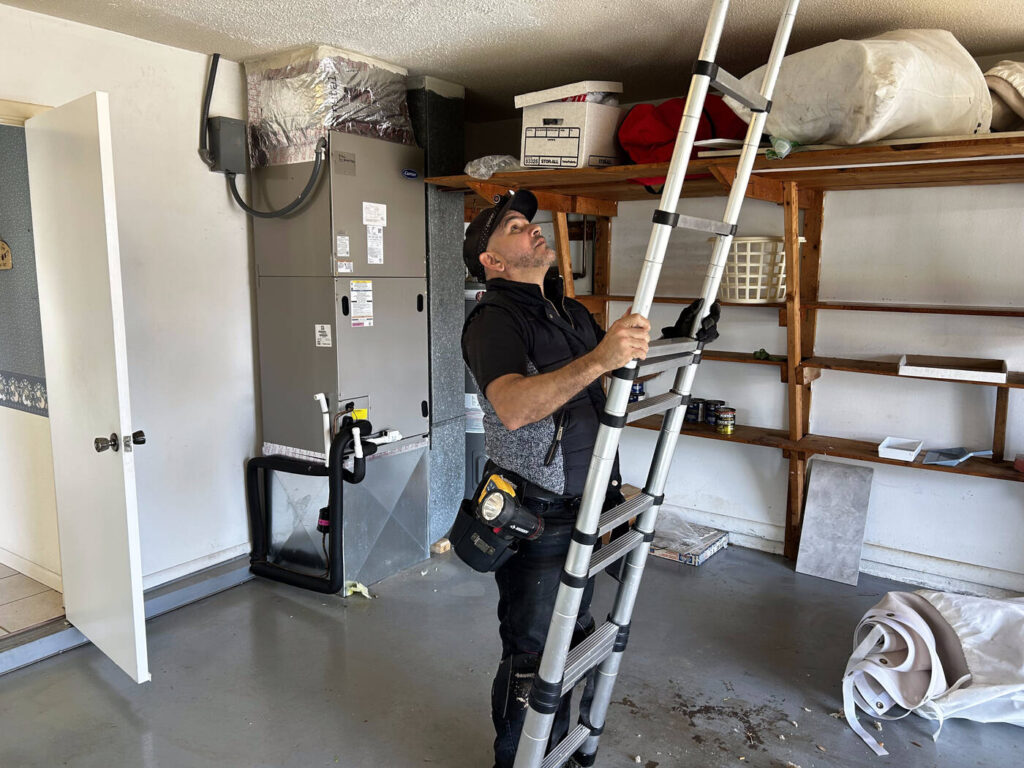
Florida 4-point inspection of HVAC and attic access by a licensed inspector
Home Insurance Inspection

Switching Home Insurers in 2026? You’ll Still Need a Current 4-Point Inspection

Switching Home Insurers in 2026? You’ll Still Need a Current 4-Point Inspection Florida’s homeowners insurance market looks different than it did two years ago. Florida’s Office of Insurance Regulation has reported rate reductions across most of the state this year, more private carriers are writing new business, and Citizens Property Insurance Corporation has shed hundreds of thousands of policies back into the private market. For a lot of Florida homeowners, that adds up to one thing: an opportunity to shop for a better rate. But shopping for a new carrier still starts in the same place it always has — with a Florida 4-point inspection. But before any new carrier will bind a policy on a home that’s more than a couple of decades old, they’re almost certainly going to ask for one document first — a current 4-point inspection. Even if you already have one from a previous renewal, it may not be recent enough to satisfy a new insurer’s underwriting rules. Here’s what’s changed in the market, why the 4-point requirement isn’t going away, and what to expect if you’re shopping for coverage this year. Florida’s Insurance Market Is Loosening Up in 2026 After several difficult years, Florida’s property insurance market has shown real signs of stabilizing. The state’s Office of Insurance Regulation reported in late July that premiums were trending down in a majority of counties this year, and Citizens’ board approved an average statewide rate reduction for many multiperil homeowners policies heading into 2026 — the first meaningful decrease in Citizens’ personal-lines rates in roughly a decade. At the same time, more than a dozen new or returning private insurers have been approved to write business in Florida following the tort and litigation reforms passed in recent years, and Citizens’ depopulation program has moved a large share of its policies to private carriers. None of this means coverage is inexpensive, and every carrier prices risk differently based on location, construction, and claims history. But it does mean many Florida homeowners — especially those who have been sitting on a Citizens policy or an older policy with a non-renewal notice — have more real options to shop this year than they did in 2023 or 2024. Why a New Policy Still Requires a Fresh 4-Point Inspection Shopping for a new carrier doesn’t mean skipping underwriting. If your home is roughly 25 to 30 years old or older, most Florida insurers require a 4-point inspection before they’ll issue a new policy, regardless of how competitive their rate is. An inspection completed for your current carrier two or three years ago generally won’t transfer — each insurer sets its own acceptable “age” for a report, and many want one completed within the last several months as part of a new application. The logic is straightforward from an underwriting standpoint. A 4-point inspection tells a new carrier whether the major systems in an older home have been maintained or upgraded, or whether they represent a claims risk the carrier isn’t willing to take on sight unseen. Homeowners who assume a lower quoted rate will simply carry over from their old policy are often surprised when the new carrier’s underwriting department comes back asking for a current report before the policy can be finalized. What a Florida 4-Point Inspection Actually Covers Unlike a full home inspection, a 4-point inspection is a focused evaluation of four systems that insurers consider the biggest sources of claims risk in an older home: The inspector documents each system with photos and a short narrative, and the completed form goes to the insurer’s underwriting department. If a system is flagged, that doesn’t automatically mean a declined policy — it often just means the carrier wants documentation that a specific repair was made, such as replacing an outdated panel or re-piping a section of plumbing, before coverage is finalized. 4-Point vs. Wind Mitigation: Two Different Forms Homeowners shopping for a new policy are frequently asked for both a 4-point inspection and a wind mitigation inspection, and it’s easy to confuse the two. The 4-point report tells an insurer whether your home’s major systems are insurable risks. The wind mitigation report, by contrast, documents storm-resistant construction features — roof-to-wall connections, roof covering type, and opening protection — that can qualify a home for premium credits under Florida’s wind mitigation discount rules. They’re separate forms with separate purposes, but because both typically require access to the attic, roofline, and electrical panel, most Florida inspectors — including our team — can complete both during the same visit. What Happens If You Skip It or Let It Lapse Delaying a required 4-point inspection is one of the more common reasons a new policy gets held up mid-transaction. Underwriters generally won’t finalize a binder without the completed form in hand, which can leave a homeowner without confirmed coverage right up against a closing date or an existing policy’s expiration. For homeowners who are already on a non-renewal notice from their current carrier, the timeline is even tighter — there’s often a hard deadline to secure new coverage before a lapse. It’s also worth noting that a 4-point inspection isn’t a one-time requirement. Even homeowners who stay with the same carrier may be asked for an updated report every few years, particularly after the home crosses certain age thresholds or if the carrier changes its underwriting guidelines. Timing Your Inspection While You’re Shopping for a Policy If you’re comparing quotes from multiple carriers this year, it makes sense to have a current 4-point inspection report in hand before you get too far into the process. A single report can typically be submitted to more than one insurer or agent while you compare offers, rather than waiting until you’ve settled on a carrier and then scrambling to schedule an inspection against a binder deadline. This is especially useful for buyers who are purchasing an older home and know from the outset that insurance shopping will be part of the closing process. Realtors working

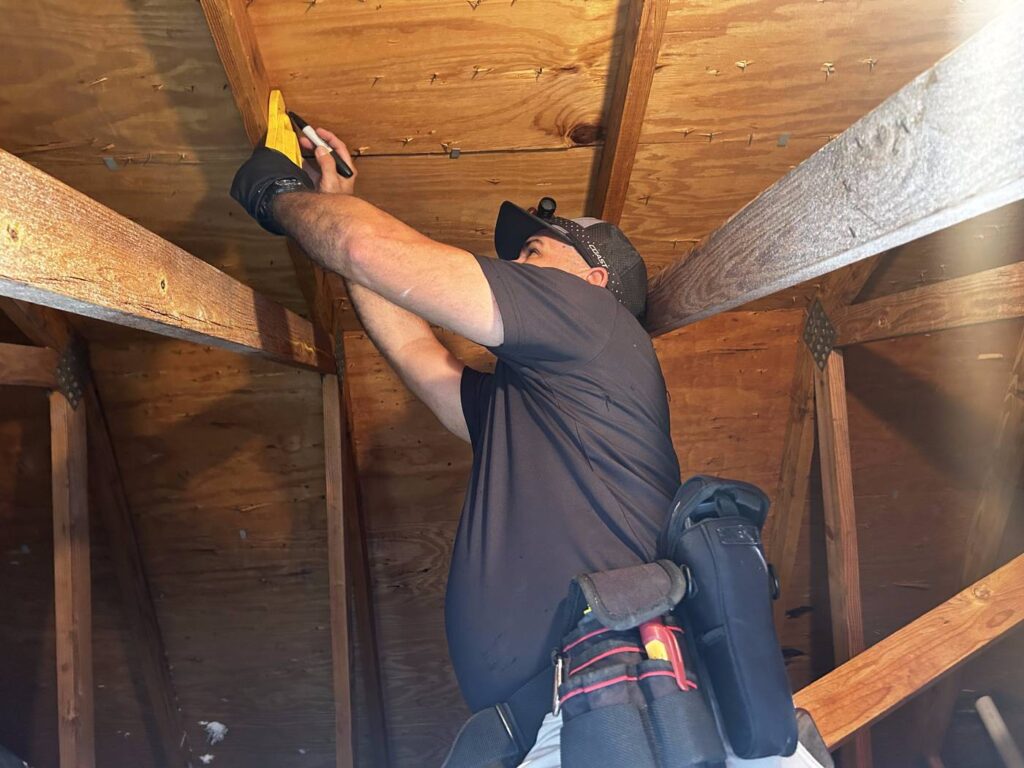
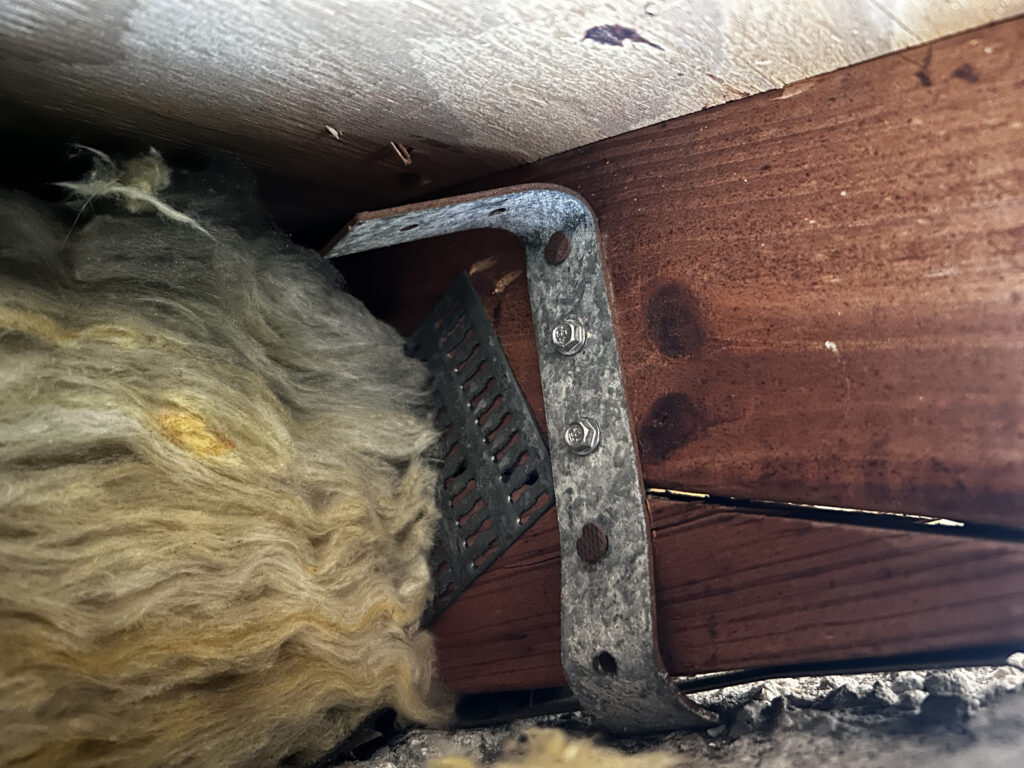
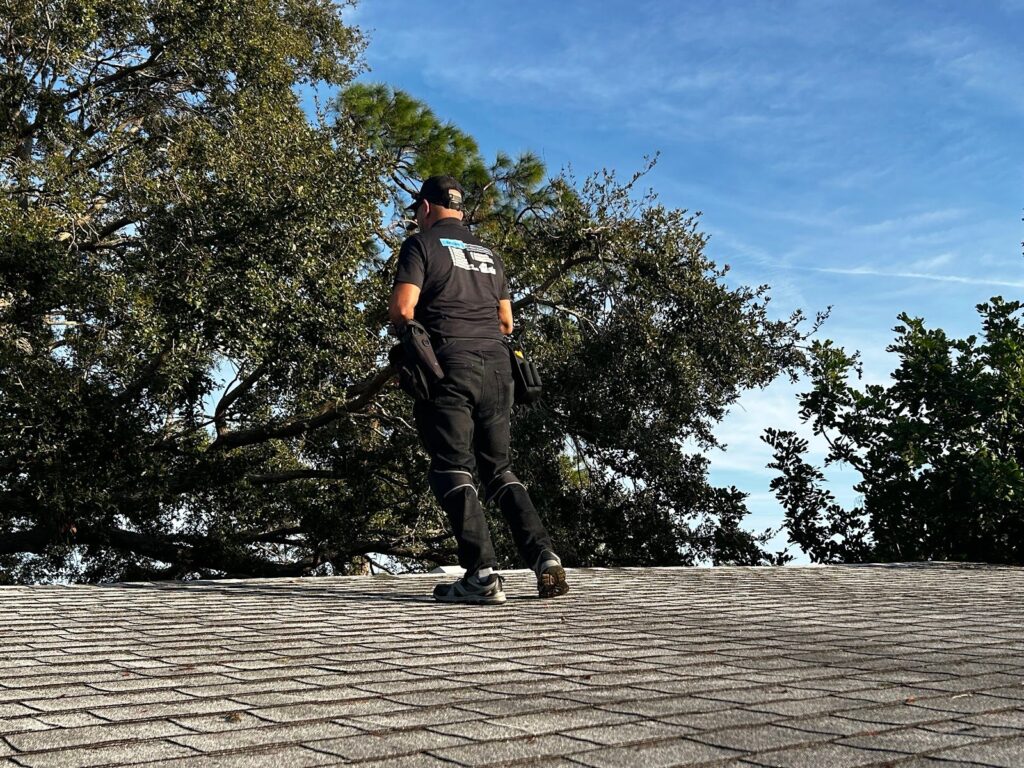
Licensed Florida home inspector examining roof rafters during a four-point insurance inspection
Home Insurance Inspection

Florida Home Inspection Checklist: The Red Flags That Decide Whether You Can Insure the House

In most states, a home inspection is about negotiation. You find out what is wrong, you ask the seller to fix it or discount it, and you close. In Florida, it is bigger than that. Here, what an inspector writes down can determine whether an insurance company will cover the house at all — and if you cannot insure it, you generally cannot get a mortgage on it. That makes the inspection less of a bargaining tool and more of a gate you have to get through. Buyers routinely learn this in the worst possible order: under contract, two weeks from closing, when a carrier declines the property over an electrical panel nobody mentioned. Here is the version you want to have read first. There are three different inspections, and they are not the same thing This trips up almost every first-time Florida buyer. These are separate reports with separate purposes, and one does not substitute for another. The full home inspection is for you. It is a broad, visual, non-invasive look at the condition of the house — structure, systems, roof, exterior, interior, everything accessible. Nobody requires it. It is the one that protects you from surprises. The 4-point inspection is for the insurance company. It covers exactly four systems: roof, electrical, plumbing, and HVAC. For each, the inspector documents age, material, and condition, with photographs. Carriers typically require it on older homes — a 40-year threshold is close to universal, 30 years is common, and some carriers still start asking at 20. It usually runs somewhere in the range of $75 to $200 and the report is generally treated as valid for about a year. The wind mitigation inspection is for your wallet. It documents the features of the home that resist wind damage so your insurer can apply discounts you have already earned. It uses a standardized state form, OIR-B1-1802, and the report is typically good for five years. Alex Home Inspection Services provides all three. That last one is worth pausing on, because it is the only inspection on the list that tends to pay for itself. Wind mitigation: the report that gives money back A wind mitigation inspection looks for things like roof covering type and its permit history, roof deck attachment, the roof-to-wall connection, roof shape, secondary water resistance, and opening protection such as impact-rated windows and shutters. The roof-to-wall connection matters more than most homeowners realize. Straps and clips that tie the roof structure down to the walls earn meaningfully more credit than older toe-nail construction. On savings, be a little skeptical of big round numbers. Many of the sources quoting 25 to 45 percent are lead-generation sites for inspection and roofing companies, which have an interest in the number sounding large. The more defensible framing: discounts commonly apply to the windstorm portion of your premium rather than the whole bill, and reported savings vary widely by home, carrier, and which features you actually have. A house with impact windows, a hip roof, and documented straps saves real money. A 1978 house with none of that may save very little. One 2026 change worth knowing: the OIR-B1-1802 form was revised effective April 1, 2026 — its first major update in over a decade, following a 2024 wind-loss mitigation study commissioned by Florida’s Office of Insurance Regulation. The new version asks inspectors to substantiate each feature more rigorously, with photographs, product approval numbers, and permit documentation. Practically, that means loose paperwork is more likely to cost you a credit than it used to be. If you have permits or product approval documents for windows, shutters, or roof work, find them before the inspection. The roof, and the 15-year rule you have a legal right to use Roof age is the number one reason Florida policies get declined or non-renewed, and there is a specific law about it that many homeowners do not know they can invoke. Under Florida Statute 627.7011, as amended by Senate Bill 2-D in 2022, an insurer may not refuse to issue or refuse to renew a homeowners policy solely because of roof age when the roof is less than 15 years old. And for older roofs, the part that actually saves people money: if your roof is 15 years or older, the insurer must allow you to obtain an inspection by an authorized inspector — at your expense — before it can require full roof replacement as a condition of coverage. If that inspection shows the roof has five or more years of remaining useful life, the carrier may not refuse to write or renew solely on the basis of roof age. House Bill 1611, effective July 2024, expanded who counts as an authorized inspector to include licensed roofing contractors. So if you are told “replace the roof or lose the policy” on a 17-year-old roof in decent shape, that is not automatically the end of the conversation. You have a documented right to have it looked at first. Six red flags that make a Florida home hard to insure These are the findings that cause carriers to hesitate or decline. Knowing them before you write an offer is worth a great deal. 1. Federal Pacific, Zinsco/Sylvania, Challenger, and Pushmatic electrical panels. These brands have a documented history of breakers failing to trip, with fire risk as the consequence. Many Florida carriers will not insure a home with one, and some require replacement before they will quote at all. This is the single most common deal-complicating electrical finding in the state. 2. Polybutylene supply plumbing. Common in homes built roughly from the late 1970s into the mid-1990s. It degrades internally from chlorinated water, developing micro-fractures and then failing without much visible warning. Most carriers treat it as unacceptable, not negotiable. 3. Cast iron drain lines in deteriorating condition. Standard in older Florida homes. The problem is that condition cannot be judged from the fixtures — it needs a camera scope of the lines. A visual inspection can tell you

Home Insurance Inspection

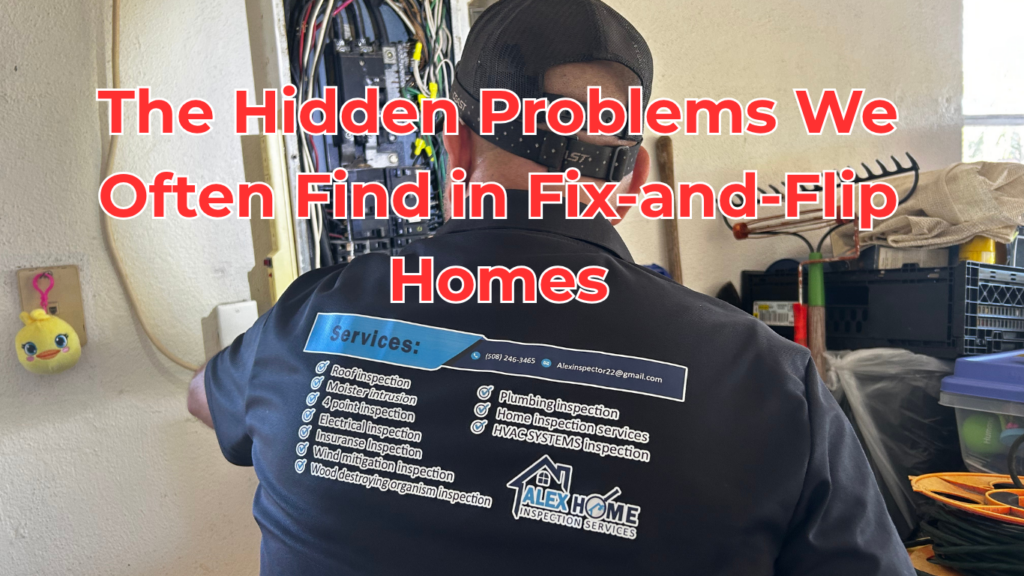
The Hidden Problems We Often Find in Fix-and-Flip Homes

The Hidden Problems We Often Find in Fix-and-Flip Homes Fix-and-flip homes have become increasingly popular across Florida. Many are beautifully renovated and move-in ready, but cosmetic improvements don’t always mean the home’s major systems have been updated. As home inspectors, we regularly inspect recently renovated properties that impress buyers during the showing, yet still hide defects that can affect safety, insurability, comfort, and future repair costs. A fresh coat of paint can transform a home’s appearance—but it doesn’t tell you what’s happening behind the walls, above the ceilings, or inside the attic. Here are seven of the most common issues we find when inspecting fix-and-flip homes 1. Cloth Wiring Hidden Behind New Finishes One of the most common surprises is discovering older cloth-covered wiring still in service. Many investors replace visible components such as: Light fixtures Switches Receptacles Electrical panels However, the original branch wiring inside the walls is sometimes left untouched. Why does this matter? Cloth wiring can be several decades old, and its insulation may deteriorate over time. While it is not automatically unsafe, aging insulation can increase the likelihood of electrical problems. In addition, some insurance companies may request additional information or recommend upgrades before providing coverage. Many buyers assume a remodeled home includes a completely updated electrical system. Unfortunately, that’s not always the case. 2. Bathroom Exhaust Fans Venting Into the Attic This is another issue we encounter on a regular basis. Bathroom exhaust fans are designed to remove warm, humid air from the home and discharge it outside. Instead, we frequently find the duct terminating inside the attic. Over time, this moisture can contribute to: Mold growth Wood deterioration Reduced insulation performance Elevated attic humidity Because the problem is hidden inside the attic, many homeowners don’t discover it until moisture damage or mold becomes visible. 3. Ungrounded Electrical Outlets Many flipped homes receive brand-new outlets and decorative wall plates. However, appearance and safety are not always the same thing. During testing, we often find modern three-prong outlets connected to older, ungrounded wiring. An ungrounded outlet can: Reduce electrical safety Increase the risk of electric shock Offer less protection for sensitive electronics Indicate the home’s wiring has not been fully updated A new outlet does not necessarily mean a new electrical system. 4. Missing GFCI Protection Modern safety standards require Ground Fault Circuit Interrupter (GFCI) protection in areas where electricity and water may come into contact, including: Kitchens Bathrooms Garages Laundry rooms Exterior receptacles Even in recently renovated homes, we frequently find missing, improperly wired, or non-functioning GFCI protection. This simple safety device can significantly reduce the risk of electrical shock. 5. Improperly Installed HVAC Ductwork A new thermostat or recently serviced air conditioner does not guarantee the system is operating efficiently. During attic inspections we often discover: Disconnected ducts Crushed flexible ductwork Air leaks Poorly insulated ducts These conditions can waste conditioned air inside the attic, increase energy costs, reduce comfort, and force the HVAC system to work harder than necessary. 6. Roof Repairs Hidden by Cosmetic Improvements Many renovations focus on kitchens, bathrooms, flooring, and paint. Meanwhile, the roof may still have: Aging shingles Previous repairs Improper flashing Evidence of leaks Deferred maintenance Many buyers spend most of their time admiring the interior finishes and rarely evaluate the roof carefully, even though replacing a roof can be one of the largest expenses after closing 7. Hidden Moisture and Water Intrusion Fresh paint can temporarily hide stains from previous leaks or repairs. At ALEX Home Inspection Services, we don’t rely on visual observations alone. We use moisture meters—and when appropriate, thermal imaging—to help identify hidden moisture that may not be visible during a showing. Our inspections often reveal: Active leaks Previous water damage Elevated moisture levels Areas that require additional evaluation Water intrusion remains one of the most expensive problems homeowners face if left undiscovered. How Buyers Can Protect Themselves Buying a renovated home can be an excellent investment, but a few simple steps can help reduce unexpected surprises. ✔ Never skip the home inspection because the home looks newly renovated. Cosmetic improvements do not reveal the condition of the home’s electrical, plumbing, HVAC, roofing, or structural systems. ✔ Ask whether the renovation was completed with permits. Electrical, plumbing, roofing, and HVAC work often require permits. Requesting documentation can help you better understand what was actually updated. ✔ Hire an inspector who evaluates the entire home—not just what is visible. A professional home inspection looks beyond the finishes to evaluate the systems that affect your family’s safety, comfort, and future maintenance costs. Final Thoughts Some of the most expensive defects we discover are completely hidden during a typical home showing. As home inspectors, our job is to look beyond the cosmetic upgrades and evaluate the home’s major systems—including the electrical system, HVAC, plumbing, roofing, attic, and structural components. Whether the home was renovated last month or twenty years ago, understanding its true condition before closing is one of the smartest investments a buyer can make. At ALEX Home Inspection Services, we help buyers throughout Florida make informed decisions with detailed, unbiased inspections that reveal what fresh paint cannot. Better Call Alex Team. Pedro Portal Alex Home Inspection Mk Director Pedro Portal Let me know How can I help you? Contact us Schedule an Inspection

Scroll to Top